WORLDSIM is a probabilistic socio-economic world simulation platform for long-horizon scenario exploration through controllable, reproducible synthetic environments.
Energy costs, inflation, household burden, and industrial competitiveness across 195 countries.
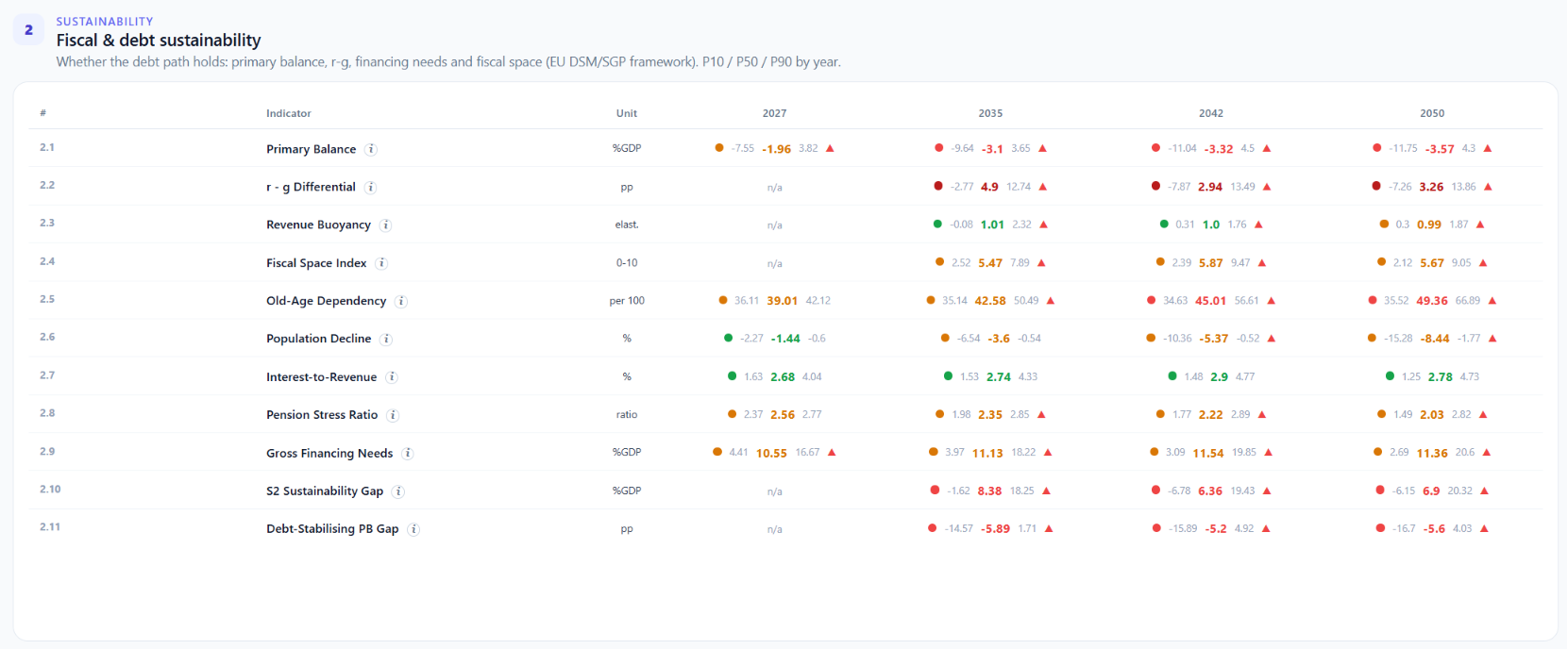
Housing affordability, sovereign debt sustainability, and fiscal pressure dynamics.
Real wages, rent affordability, cost of living, and migration flows.
Migration outflows, fiscal revenue collapse, crime rates, and demographic decline.
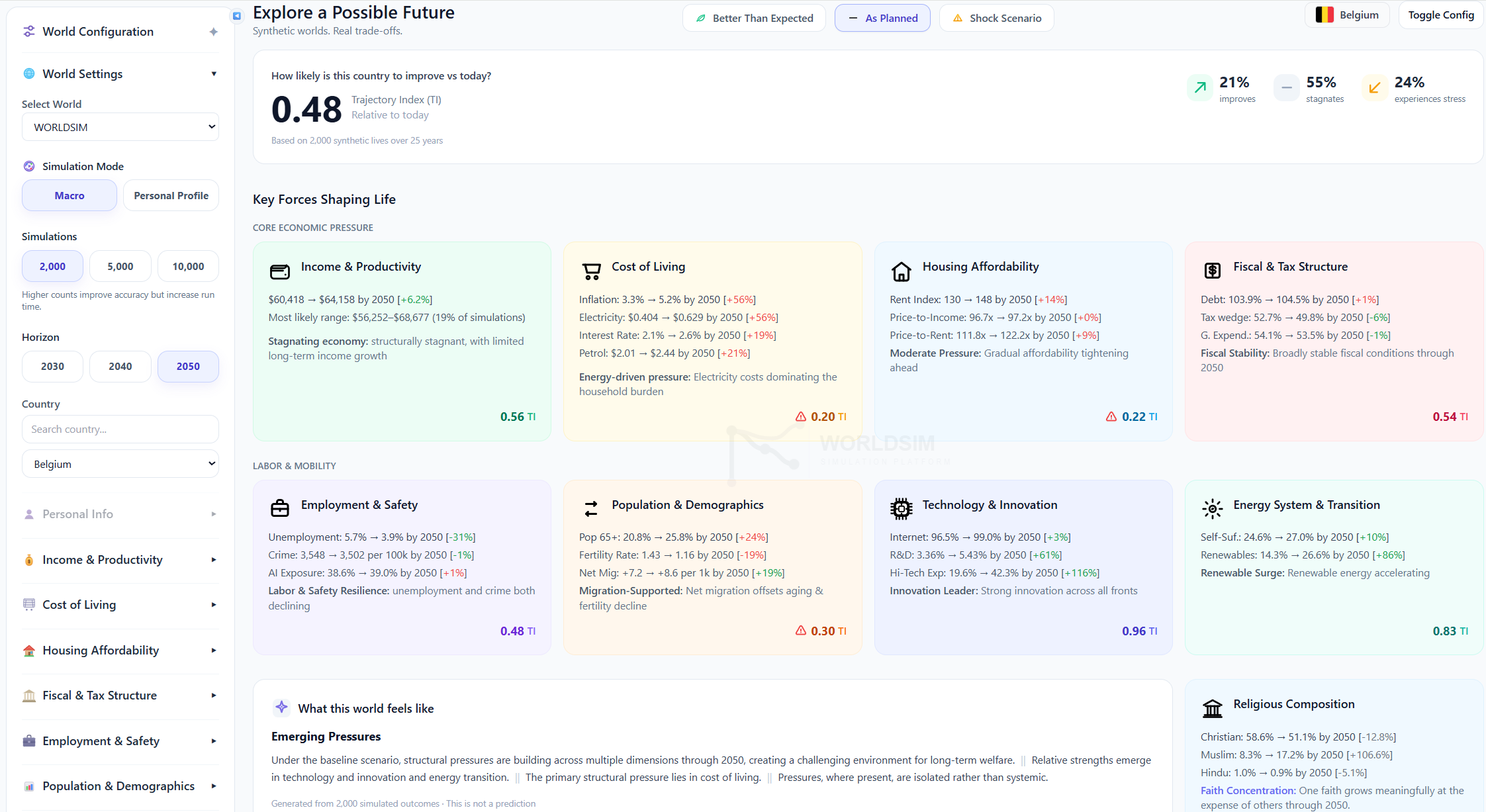
These aren't hypotheticals. They're scenario configurations in WorldSim, simulated across 10,000 trajectories, 26 KPIs, and 195 countries.
A simulation engine designed for institutions that need to understand structural futures, not simplified trend lines.
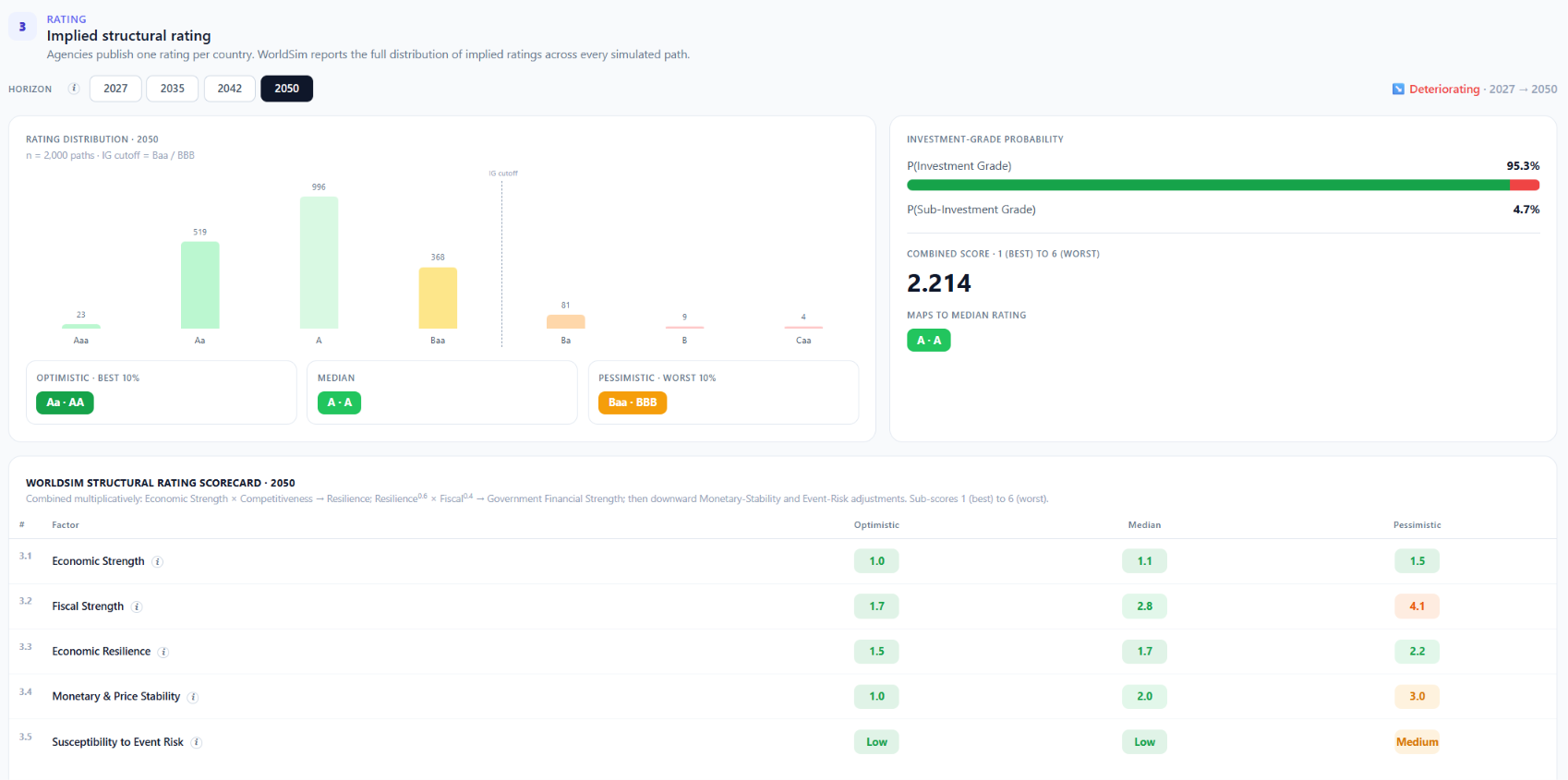
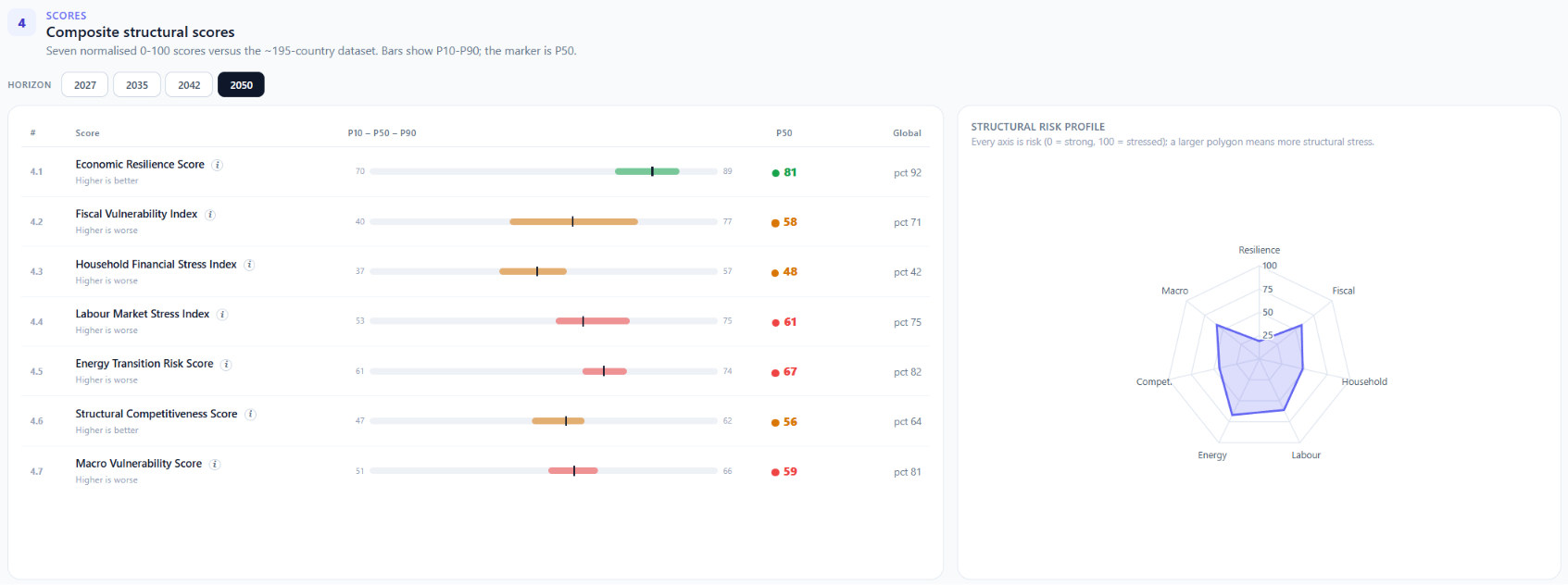
Run Better, Average, and Shock scenarios across 26 KPIs. Every output is a probability distribution, not a point forecast.
100+ active rules enforce causal relationships between variables. GDP shocks propagate to unemployment, migration, and fiscal pressure.
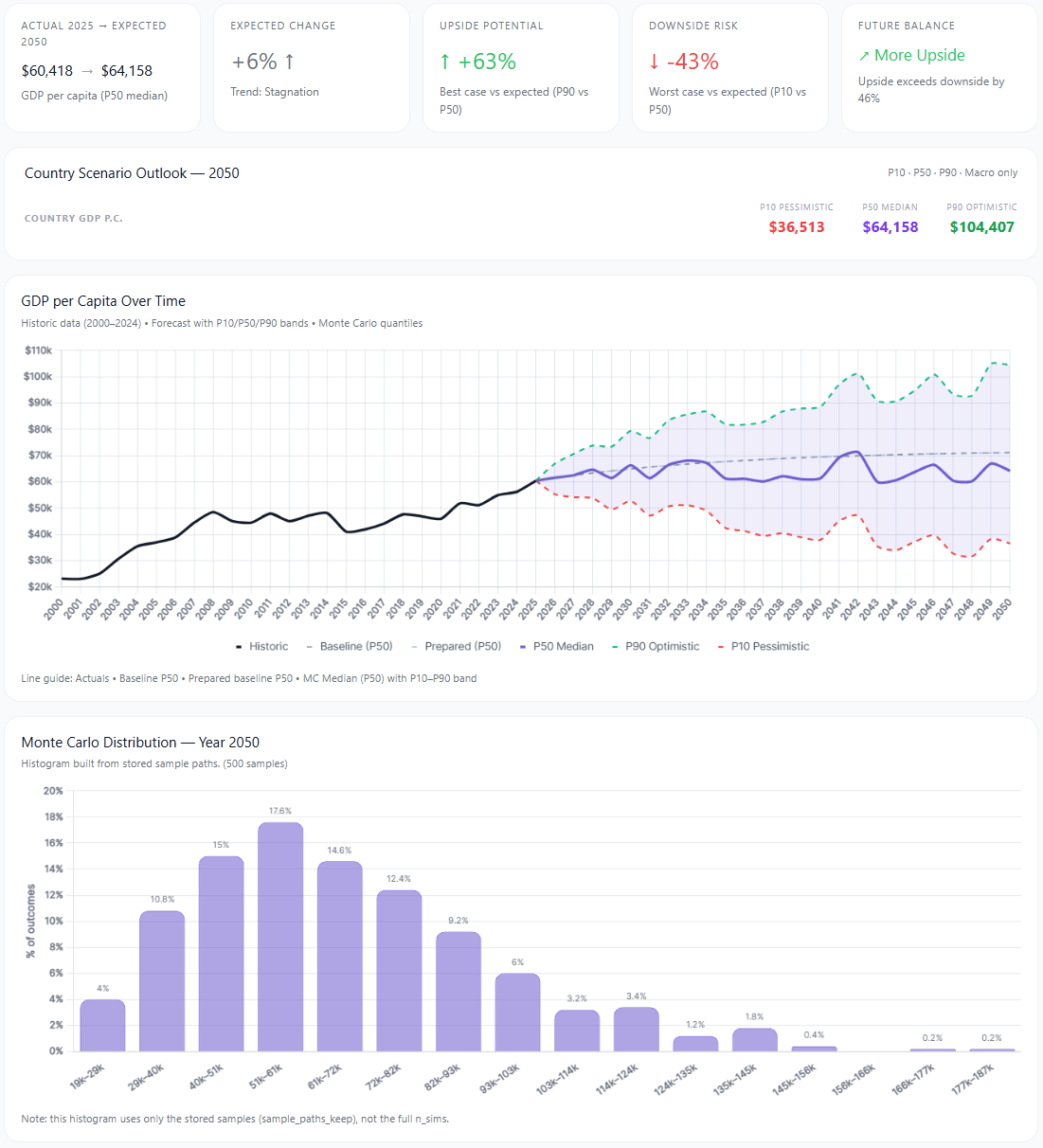
10,000+ simulated paths per scenario using two-piece lognormal and bounded-logit draws. Full P10/P50/P90 quantile outputs.
Translate macro outcomes into personal impacts: income projections, housing affordability, and job risk based on age, industry, and salary.
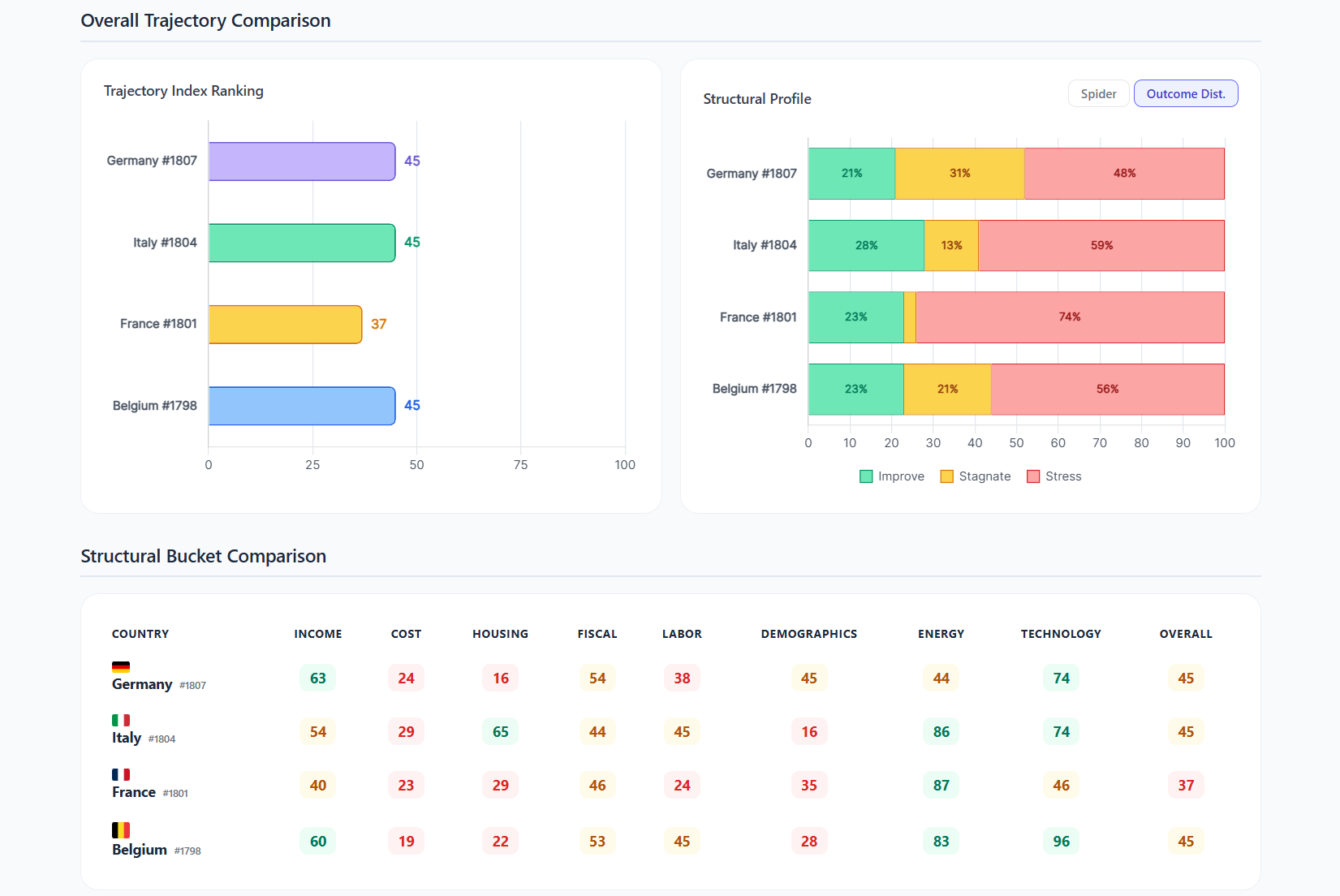
Compare any two scenarios side by side and validate simulation accuracy against historical actuals using backtesting metrics across all KPIs.
Each simulation pass applies six sequential layers, producing structurally coherent probabilistic futures.
Ingest from OECD, World Bank, Eurostat, and IMF. Normalise into canonical country-metric observations.
Generate P10/P50/P90 forecast distributions using damped trend models and sigma bands for each variable.
Apply user-defined scenario overlays (Better Than Expected, As Planned, or Shock) with configurable sigma shifts and persistence for all KPIs.
10,000+ stochastic draws per scenario path using two-piece lognormal distributions. Produces full quantile fan charts.
100+ structural rules enforce causal economic coherence. GDP shocks ripple through unemployment, migration, fiscal, and energy systems.
Translate macro country futures into personal outcomes (income, housing burden, job risk) based on age, industry, and salary profile.
WorldSim is designed for professionals who make decisions under structural uncertainty.
Ministry-level strategic planning and fiscal scenario analysis across structural variables.
Country risk assessment, impact research, and probabilistic scenario modelling.
IMF, OECD, World Bank: structural modelling for multilateral policy evaluation.
Market entry analysis, regional exposure analysis, and long-term planning under uncertainty.
Academic and think-tank research on economic dynamics, demographic shifts, and structural change.
Synthetic socio-economic scenario data for AI model training, stress testing, and validation.
The EU AI Act requires high-risk AI systems to demonstrate robustness (Article 15), risk coverage (Article 9), data representativeness (Article 10), and systemic risk assessment (Article 55). WorldSim provides the structured macro scenario environments these obligations demand.
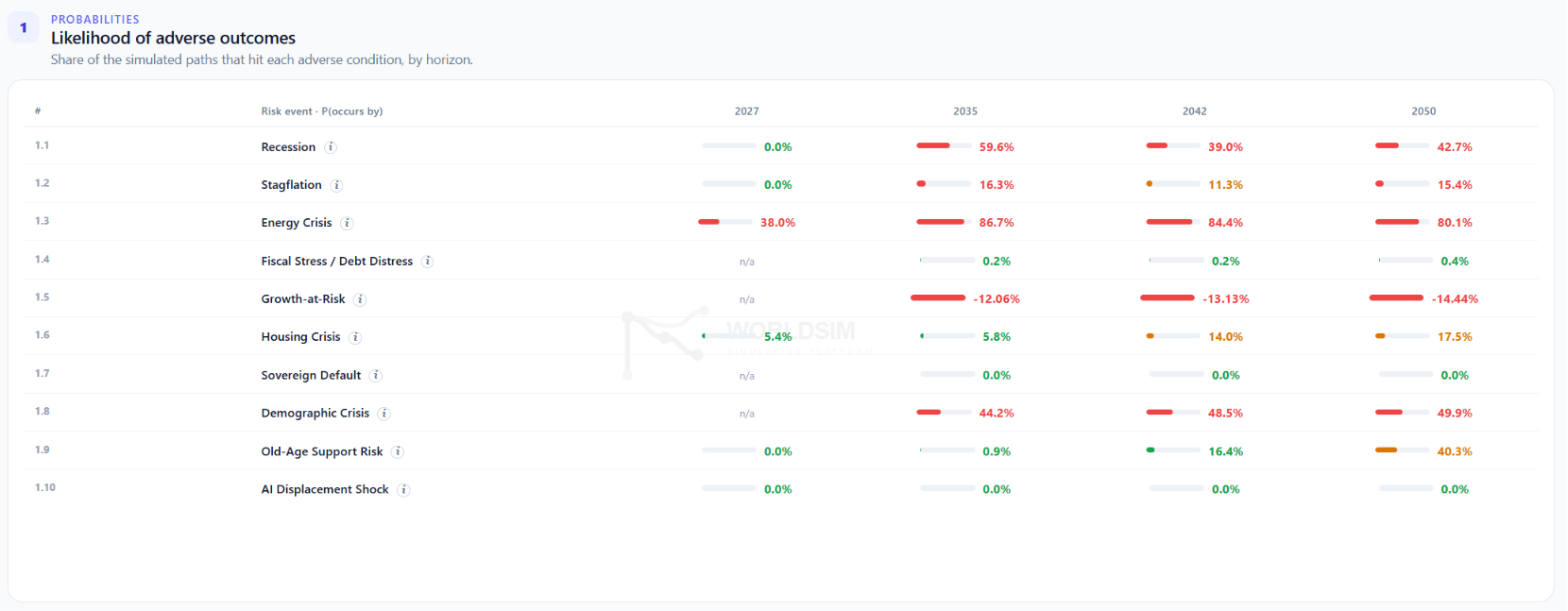
Test AI systems against recession, inflation, energy crisis, and demographic shift scenarios with 5,000+ simulation paths per environment.
Structured library of "reasonably foreseeable" macro conditions across 195 countries. Document scenario coverage with full audit trail for conformity assessment.
Every simulation is deterministic per seed and run group. Full traceability for representativeness (Art. 10) and GPAI systemic risk assessment (Art. 55).
WorldSim's canonical database harmonises macroeconomic data from the world's most authoritative institutional sources.
World Development Indicators: GDP, demographics, labour market, infrastructure, and development metrics.
World Economic Outlook: fiscal indicators, government expenditure, revenue, public debt, and macroeconomic aggregates.
Tax, housing, energy, and labour statistics, including tax wedge calculations, price indices, and energy balances.
European statistical office: high-frequency socio-economic data, energy prices, migration, and demographic structure.
Join research institutions, sovereign funds, and policy teams already using WorldSim to model structural country futures.